
Sven-Anwar Bibi on Design as a Social Discipline
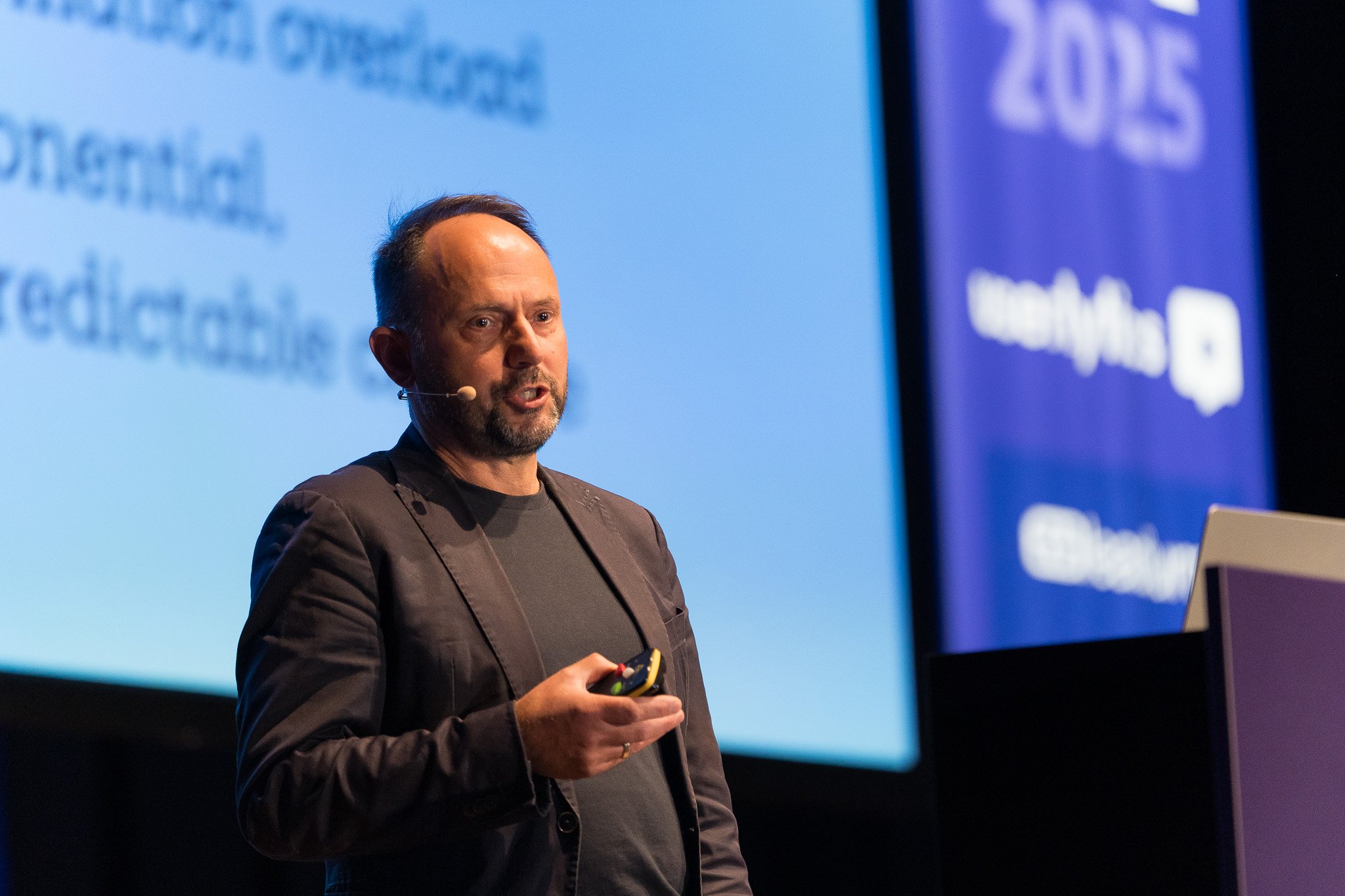
When we speak with Sven-Anwar Bibi, he is just coming down from the Alps after a day of hiking. It feels like a fitting backdrop: in a recent reflection he compared leading transformation to “pushing a boulder uphill in thick fog, with low visibility, steep ground, uncertain paths, and no shortcuts.” For him, both hiking and design leadership demand the same posture — reading the terrain, adjusting one’s stance, and moving with intent even when the path is unclear.
Sven speaks with the ease of someone who has long lived between many worlds: executive consultant and educator, strategist and philosopher. His own path has been anything but linear — from cabinet maker to professor in Cairo, to leading digital transformation at Futurice — a zig-zag that sharpened his view of design as a discipline of translation. Asked about the evolution of the discipline, he pauses, then likens it to “building a car while it’s running.” Contexts shift as the world shifts, he explains, and designers must adapt not by clinging to tools and workflows, but by honing the enduring skills of interpretation, translation, and social analysis.
He traces design’s evolution across decades — from supporting engineers in product development, to translating cultural signals into brands, to shaping digital experiences, and most recently, structuring organizations and business models. Each shift has brought design closer to the center of business thinking. The sharper question now, he argues, is: how will design create value in the future?
“To a certain extent, we co-created the substitution of our own discipline”
Part of the challenge is that consultancies may have helped create their own fragility. “We invented design systems, built design operations, embedded them into corporate structures — and in doing so, enabled companies to do for themselves what we once sold as a service. To a certain extent, we co-created the substitution of our own discipline,” he reflects. The question becomes not whether design can deliver, but how it can prove its relevance as conditions keep changing.
Yet he resists the idea that technology will strip design of its essence. Yes, commodification and automation will inevitably impact some practices, but for him, this misses the point. “If we look at design as being a social discipline, it will remain a core aspect of societal and socio-demographic development,” he insists. Complexity is only growing, and in that complexity lies the ongoing mandate for design.
This conviction leads him to frame design as a layered identity. At its core lies a social responsibility and interpretive capacity that remain constant. On top sit context-specific roles — corporate, public, sectoral — that shift with circumstance. Unlike software developers, who are rarely trained as social decoders, designers are uniquely prepared for this interpretive role.
“There is a strong need to better understand the capacity of design to create impact, regardless of whether it’s physical, digital, or strategic.”
It is a reminder he believes the field has neglected. “The general topic of design being a social discipline was not invented by me,” he acknowledges, citing Dutch professor Kees Dorst and Berlin-based professor Gesche Joost. But for Bibi the point bears repeating. The impact of design decisions, he argues, is immense: a single tweak in a UX flow at Google can instantly alter how 1.5 billion people interact with technology.
For him, this sense of consequence is central. The effects of design ripple outward — from the choice of materials in a chair, to the energy consumed in its production, to the organizational decisions that reshape the lives of thousands. “There is a strong need to better understand the capacity of design to create impact,” he says. “Regardless of whether it’s physical, digital, or strategic.”
That conviction shapes his approach to teaching. Preparing students for the future means more than giving them tools; it means equipping them with an awareness of consequence. “You have to build this layer around the projects, embed them in a wider discourse,” he says. In his classes, projects become springboards into conversations about ecosystems, sustainability, and ethics — less a workshop of tools than a forum weaving philosophy, science, engineering, and technology into design education.
“In business you want specific answers to specific questions. Full stop. Don’t deviate. Don’t philosophize. Don’t make it bigger.”
But the business world, he admits, does not always welcome such expansiveness. “In business you want specific answers to specific questions. Full stop. Don’t deviate. Don’t philosophize. Don’t make it bigger.” He laughs as he says it, but the point is serious: to focus only on craft or technical skill is to miss design’s societal role. For Bibi, what must be taught far more rigorously is the unity of design’s global craft — its core identity and the awareness of how it impacts the world.
“Innovation, exploring together, the experimental part — people don’t easily buy that when headwinds are blowing strong. They pay money for immediate impact”
Bibi has spent years inside the consultancy model and is clear-eyed about its limitations. In times of economic or organizational distress, clients pay for immediate impact, not open-ended exploration. That has forced consultancies to broaden their acumen — understanding markets, value chains, organizational structures, and now AI-driven transformations. “Innovation, exploring together, the experimental part — people don’t easily buy that when headwinds are blowing strong. They pay money for immediate impact,” he says. The challenge, he suggests, is balancing this demand for short-term outcomes with holding space for design’s deeper, longer-term role.
The larger forces reshaping the discipline — AI, commodification, automation — leave him pragmatic but not cynical. “Design will not disappear,” he says. “It will definitely transform, independent of technological developments.” And because the defining challenges of our time — sustainability, democracy, authoritarianism, climate — are not merely technical but social, cultural, and political, design will remain indispensable. “These large questions,” he says, “will be looked at from a design perspective even more.”
“Be curious and be humble. Curiosity, because everything is changing so fast and the technological impact on our discipline will be immense. Humility, because only by observing and listening can you recognize the patterns as they repeat. Sometimes you just have to sit, observe, and taste.”
Asked what advice he would give to young designers entering this shifting terrain, his response is measured but direct: “Be curious and be humble. Curiosity, because everything is changing so fast and the technological impact on our discipline will be immense. Humility, because only by observing and listening can you recognize the patterns as they repeat. Sometimes you just have to sit, observe, and taste.”
It is not the romantic image of the designer as a visionary auteur, but rather as an attentive translator of social signals. For Bibi, that is where the future lies. The car is still moving, and the task is to keep building while it runs — not just with technical precision, but with social responsibility at the core.
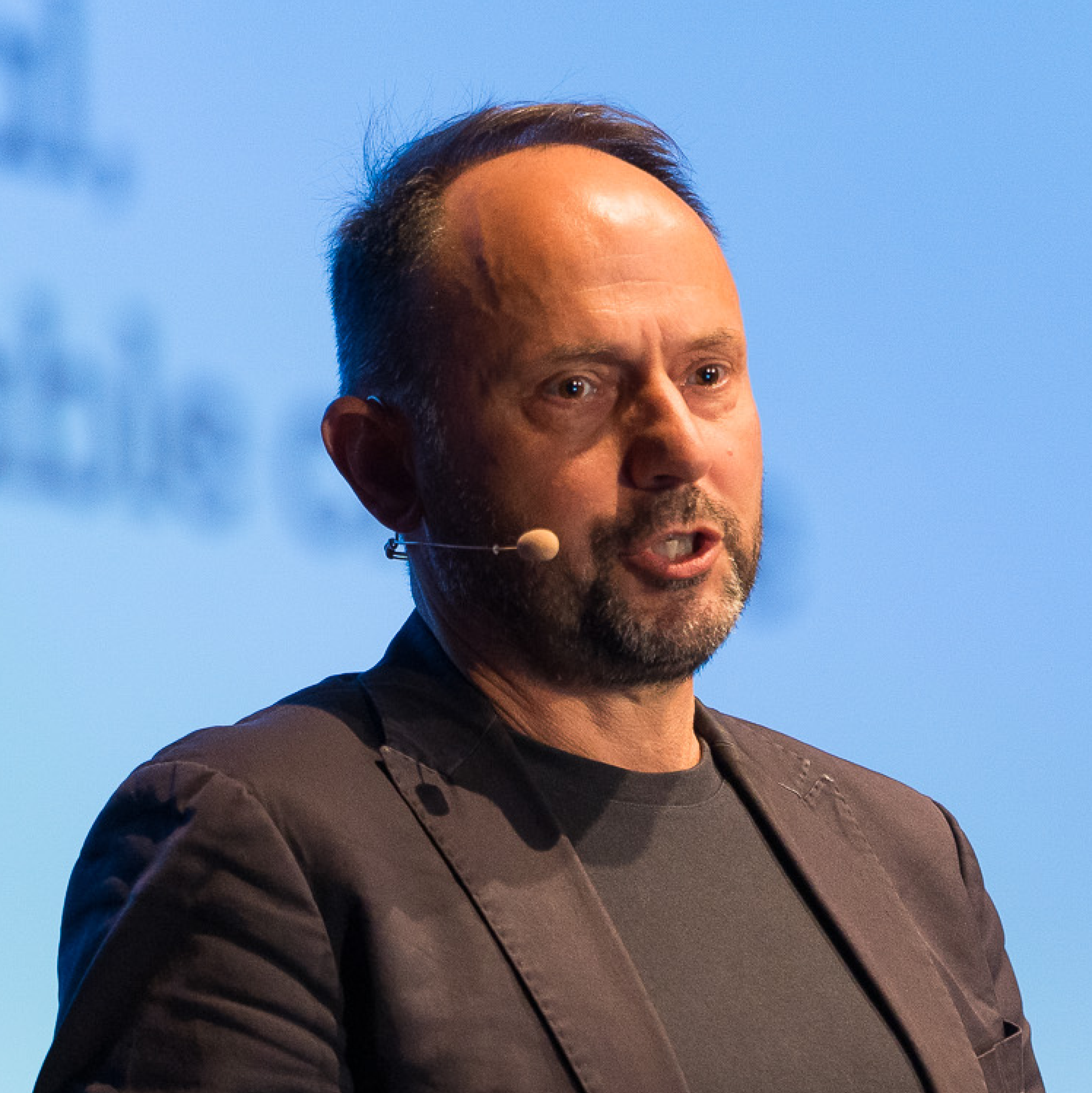
Sven-Anwar Bibi is a resilient and visionary leader with 20+ years of experience spanning design, strategy, and technology leadership with a background in human-centered design, now operating at the intersection of corporate strategy and digital technology.
He combines a creative innovation background with business acumen and operational precision. Recognized for guiding organizations through market turbulence, empowering teams, and driving customer-centric innovation, he spent the past years supporting large organizations navigating digital and AI transformation.
