
Caroline Arvidsson on What Doesn't Fit in the Efficiency Box
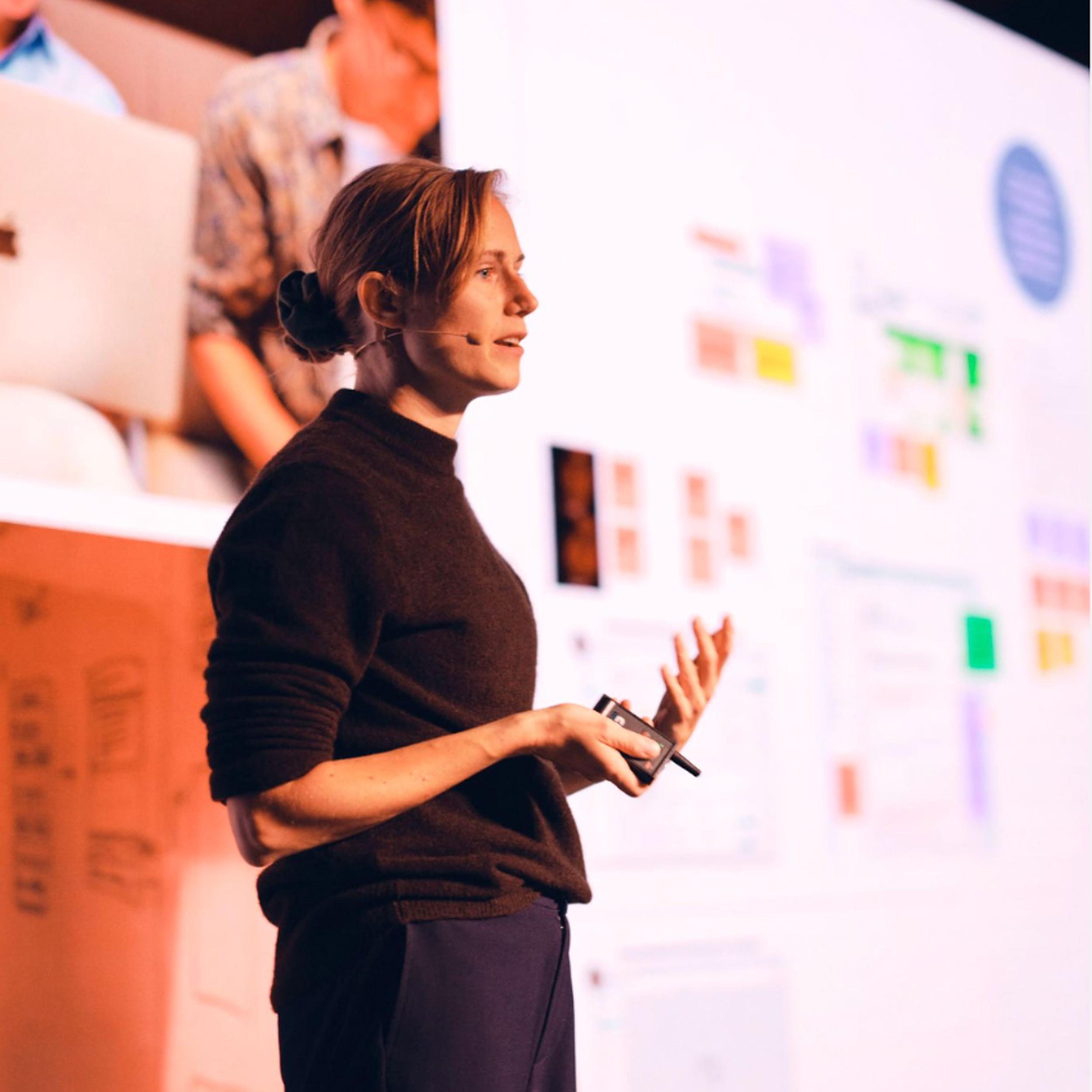
When we meet Caroline Arvidsson online in September 2025, she's calling in from her home in Sweden on a Friday afternoon. It's been a joy to reconnect after catching a brief moment at the Impact Minds conference in March the same year - a first proper conversation in years. Our paths have crossed many times before. Caroline and Nina worked together at CIID in Copenhagen and later at the service innovation studio IXDS (now PWC CX) in Berlin - a time of crafting experience probes, exploring speculative approaches, building physical prototypes and testing them in the wild. Before remote research became the default.
Now Caroline is in a season of transition. Until February, she led a UX research team at a major tech company. Then came the layoffs, the garden leave, and now - a space to breathe and make sense of what's happening to the field she's been part of for more than a decade. As Caroline would later reflect: "Things are changing so quickly that I already see the world from a new angle." True to her principle that what was true yesterday may not be true today, her perspective has continued to evolve - particularly toward optimism about what's emerging from the turbulence. We've woven in some of those evolving insights, but the core of this piece captures a moment of transition worth documenting.
“I was mind blown that there was an intersection between ethnographic methods and design - that there was a way to really understand problems and try to design for them.”
Her path into design began far from tech. As a young girl, she worked with ceramics and handicrafts, enrolling in design school expecting to continue with clay. Instead, she discovered something that felt like a revelation: experience design, social design, co-design. "I was blown away learning about the intersection between ethnographic methods and design - that there was a way to really understand problems and try to design for them. That was something else than the handcraft that brought me there." She never entered the ceramics workshop at design school.
After CIID and IXDS, Caroline co-founded the tech startup Refugee Text, then moved to a large enterprise software company as a research manager. Each shift expanded her practice while revealing the friction between what design aspires to be and what organizations actually need it to do.
"I needed some time to reset, to put my feet back on the ground after a big global corporate role, to be frank," she says. Now she's witnessing what she calls an "insanely turbulent situation," but with a perspective that cuts through the panic. The layoffs weren't about design alone - sales, customer success, and other functions were equally affected. For Caroline, this is less a design crisis than a broader economic recalibration.
“I think AI tools are standing in the way between really talented and cross-functionally able designers and workplaces.”
She describes reading through job descriptions, finding them all essentially the same. "Job descriptions look the same whether you're applying for a product management role or a design director role. They all list cross-functional collaboration, communication skills, interpersonal skills - stuff that good UX designers, researchers and design leaders have done all the time. So we're a perfect fit, but then you don't even get to speak to the recruiter; you're ghosted. I think AI tools are standing in the way between really talented and cross-functionally able designers and workplaces."
It's a sharp observation that's emerged across our conversations: the methods have spread, the influence has diffused, but the identity has blurred. What once seemed like victory - design thinking in every department, empathy workshops for sales teams, journey mapping as common vocabulary - now feels more ambiguous. The skills are valued, but the people who taught them are being let go.
This ambiguity extends to titles and roles. We discussed watching colleagues move from service designer to CX strategist, not because their work changed but because the language shifted. For her, it's less a crisis than an evolution - frustrating perhaps, but not necessarily tragic. She acknowledges the practical reality of needing to speak the right language when applying for roles, but refuses to be defined by it.
"I don't really care what you call me. It's about curiosity. It's about approaching problems with mixed methods, asking questions, experimenting, testing, collaborating with people with different perspectives. We've always done that. Now organizations are even more complex - we have more questions to ask."
“Differentiation used to be our strength. We have to remind each other of that. Don’t make the same because it’s faster!”
The consequences extend beyond individual careers. When everyone defaults to the same AI-generated patterns, products and services lose what made design valuable in the first place: differentiation. "Differentiation used to be our strength," Caroline insists. "We have to remind each other of that. Don't make the same because it's faster!"
Her advice to younger and aspiring designers is direct: "If you're studying right now, I can't even tell you where we're going to be in a year. What I would do is get really good at what I like to do. Because then you can keep evolving. That was probably always true, but now the gap between what designers get to do in school and what they get to do in many companies is wider than before."
She's adamant that forcing yourself into something others want you to do is a trap. "If you're already in an educational context forced to do something you're not interested in, you're cementing a way of working that's just going to make you unhappy. Whatever you're already doing you will probably do more of later, unless you deliberately choose a different path." Her point isn't dismissive - it's about sustainability. Better to find work that genuinely engages you than to burn out chasing a title.
The job market, she believes, is not as bleak as its reputation suggests - but entering it has fundamentally changed. The traditional way of applying for jobs no longer works, and LinkedIn Premium plus ChatGPT-generated job listings and applications won't help. "What's changed is that the path forward is less clear, the entry points less obvious, the signals harder to read. If a job listing is AI-generated and doesn't mirror the intricate nuances that the team is really looking for in a candidate, then the AI-generated applications will match the job listing but miss the team's target."
“Everybody wants to seem like they know what they’re talking about, when what was true yesterday is not true today. So it does not make sense to be affirmative in your opinions. It makes more sense to just ask - what do you all think? Where have you tried? How is that working for you?”
One phrase that guides Caroline's thinking is: I might be wrong. It's become her mantra in a moment when everyone seems desperate to appear certain. "There are lots of opinions, but very little dialog and just mutual exploration," she says. "Everybody wants to seem like they know what they're talking about, when what was true yesterday is not true today. So it does not make sense to be affirmative in your opinions. It makes more sense to just ask - what do you all think? Where have you tried? How is that working for you?"
For Caroline, this isn't abstract philosophy - it's a practical necessity. "Co-thinking, co-creating - this is more important than ever. That's the only way we will solve real problems." She contrasts this with the ease of generating yet another interface that looks like all the others. "It's hard work. Creating sameness is easy. But spend a day in public space just observing - there are endless problems out there for designers to address."
This posture of curiosity extends to the topic everyone is shouting about: AI. Caroline has been testing tools, reading research, even talking with an engineer who built a synthetic user research platform - "a hallelujah moment in itself," she notes wryly, given how rare it is for researchers and engineers to have substantive conversations.
“The AI researcher kept repeating my name in a way that sounded derogatory. Humans adjust in dialogue depending on what the other person said, something the AI clearly can’t anticipate.”
Her position is nuanced. She's still cautious about using AI for qualitative research with synthetic users - words connected by algorithms that sound meaningful but lack the substance of actual human conversation. Her recent experience being interviewed by an "AI researcher" supported her skepticism. When she didn't understand a question and asked for clarification, the AI's response felt hostile - something a human interviewer would have navigated by adjusting their approach. "It kept repeating my name in a way that sounded derogatory. Humans adjust in dialogue depending on what the other person said, something the AI clearly can't anticipate."
At the same time, she resists the instinct to dismiss [AI-powered research practice] entirely. "We're trying to make research more holy than it is," she admits. Real research is often messy: wrong participants, too few interviews, power dynamics in the room. She recalls interviews where a boss sat next to their report, making genuine answers way more difficult. If research practice is already compromised, perhaps the conversation about AI should be less about defending purity and more about staying engaged with what's actually happening. "We [user researchers] need to be there, explore it, ask questions about it, instead of standing outside and saying, 'This is wrong, I don't want to do it.' We need to be part of the conversation."
The tension between automation and craft in its broader sense shows up everywhere. Whether it's writing a job application, an interview guide, or design-sketching, the value isn't only in the output - it's in the thinking that happens through making. Automation can produce plausible results, but it can't replicate the learning, the reflection, the development of ideas that happens when the brain and hands work together.
“Research is inherently slow, requiring safe spaces, practiced listening, and vigilance against bias. All of these things fit somewhat poorly into corporate environments. It just doesn’t belong in the same box as ‘let’s be more efficient’.”
One of Caroline's sharpest insights is about the fundamental mismatch between qualitative research and many corporate environments. Research is inherently slow, requiring safe spaces, practiced listening, and vigilance against bias. It needs time to build trust and uncover what people actually think rather than what they think they should say. "All of these things fit somewhat poorly into corporate environments," she says. "It just doesn't belong in the same box as 'let's be more efficient.'"
Caroline acknowledges this tension plays out differently across organizations. Big tech companies, caught in an "AI feature honeymoon", may be especially prone to efficiency pressures. Other organizations find better balances. But the fundamental mismatch remains.
The contrast with CIID, where she began her career, remains sharp in her memory. Students there know they're in a precious year, surrounded by people they'll never assemble in one place again, so they dedicate themselves fully. Methods don't need defending - cross-collaboration, testing, wild ideas simply happen.
In many corporate environments, the opposite is often true. Time gets spent justifying methods rather than applying them, explaining value rather than creating it. "You can spend a lot of time arguing for why - for instance - speaking to real users is important, and it takes time and essentially money away from delivering real value, if you could just get to work."
For Caroline, finding balance matters more than taking sides. "Tech is not put into this world to replace the analogue. Use your service design skills wisely - identify which touchpoints can be made efficient that are now tedious and time-consuming, and put your efforts into interpersonal and analogue experiences. That balance makes a strong service, not digital replacement."
“Why is anybody telling us to do anything? Why aren’t we the ones deciding what our profession is and leading the way? How did we become a profession that others tell us what to do?”
Near the end of the conversation, Caroline challenges a premise in one of our questions. We'd asked how design's role had shifted - what designers were being asked to do now versus five or ten years ago. Her response cuts to the heart of the profession's predicament: "Why is anybody telling us to do anything? Why aren't we the ones deciding what our profession is and leading the way? How did we become a profession that others tell us what to do?"
For a long time, designers did exactly that. "We decided we should be doing strategy, we should be doing that. We put ourselves right there in the center of tech organizations. We were all super good friends - until an economic crisis hits or something else comes through the door."
She laughs as she says it, but the observation stings. Designers might have become too chameleon-like, too eager to adapt to whatever organizations asked of them. Now the field is paying the price for that flexibility. "Maybe we just did too good a job convincing them good design is good business," she reflects. "Product managers went to research workshops on a Saturday. They believed in us." As Miles puts it during our conversation: they drank our Kool-Aid. "And now," Caroline continues, "they don't think they need us to do it."
It's a sobering realization, but not a terminal one. Not all design work is meaningful, and not all contexts support good work. Perhaps the real crisis isn't whether design survives, but whether it remains connected to the exploratory, curious, human-centered work that drew people to it in the first place.
Caroline's reflections don't offer easy answers. She doesn't claim to know where the profession is headed or how to fix its structural problems. But she insists on something more fundamental: staying curious, keeping the conversation open, and resisting the pressure to be certain when everything is in flux. In a moment defined by hype and fear in equal measure, that might be the most honest - and most useful - posture of all.
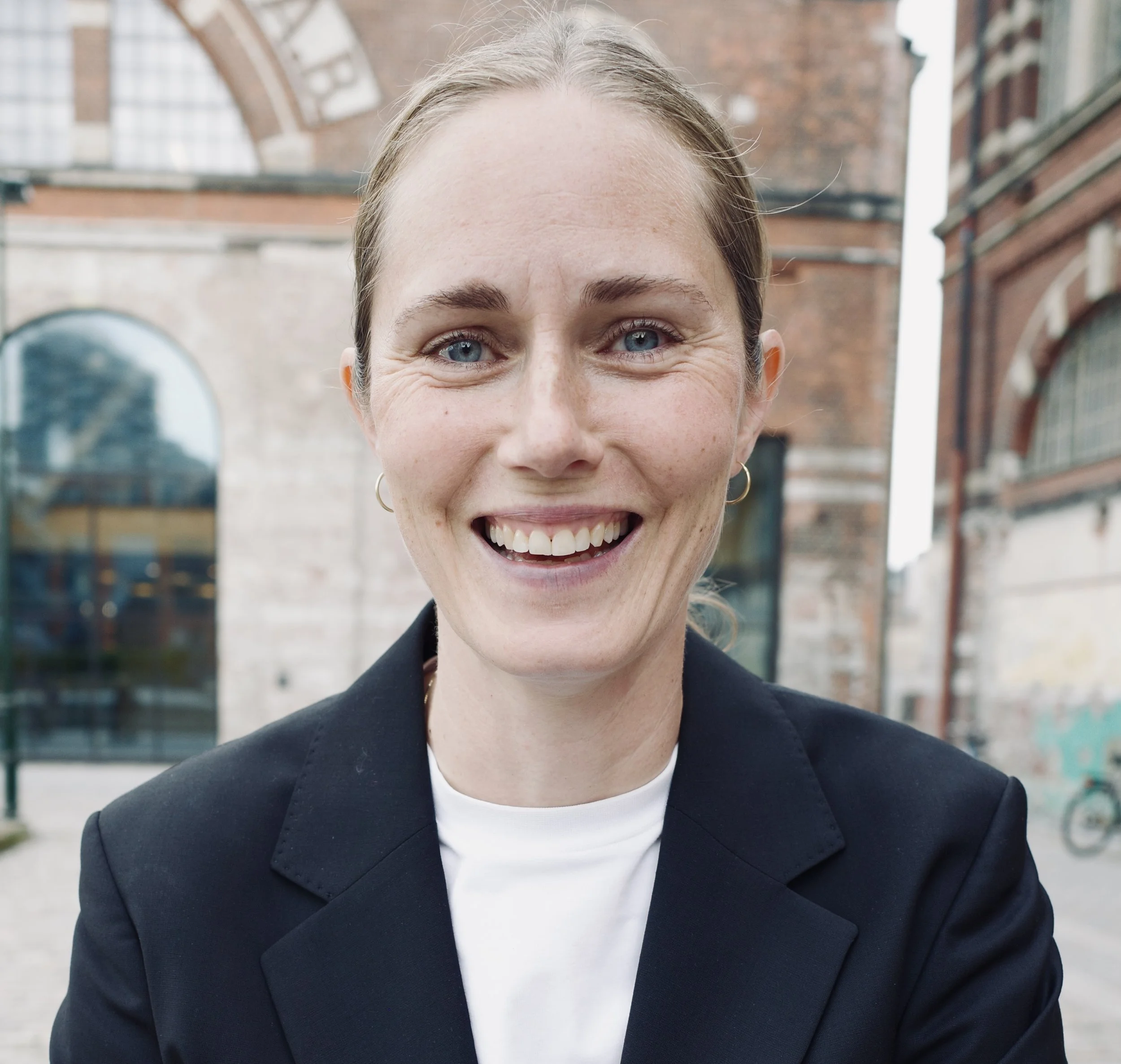
Caroline Ardvidsson is a design leader with 15+ years of experience within product design, organizational design, and service design. She is passionate about enabling organisations through design that practises cross-functional collaboration, clear communication, and continuous discovery. Caroline lives by that design is a mixed methods approach founded in curiosity and empathy and a love for high quality and user friendly functionality.
