
Göksu Kaçaroğlu on Thinking Beyond the Boundaries of Design
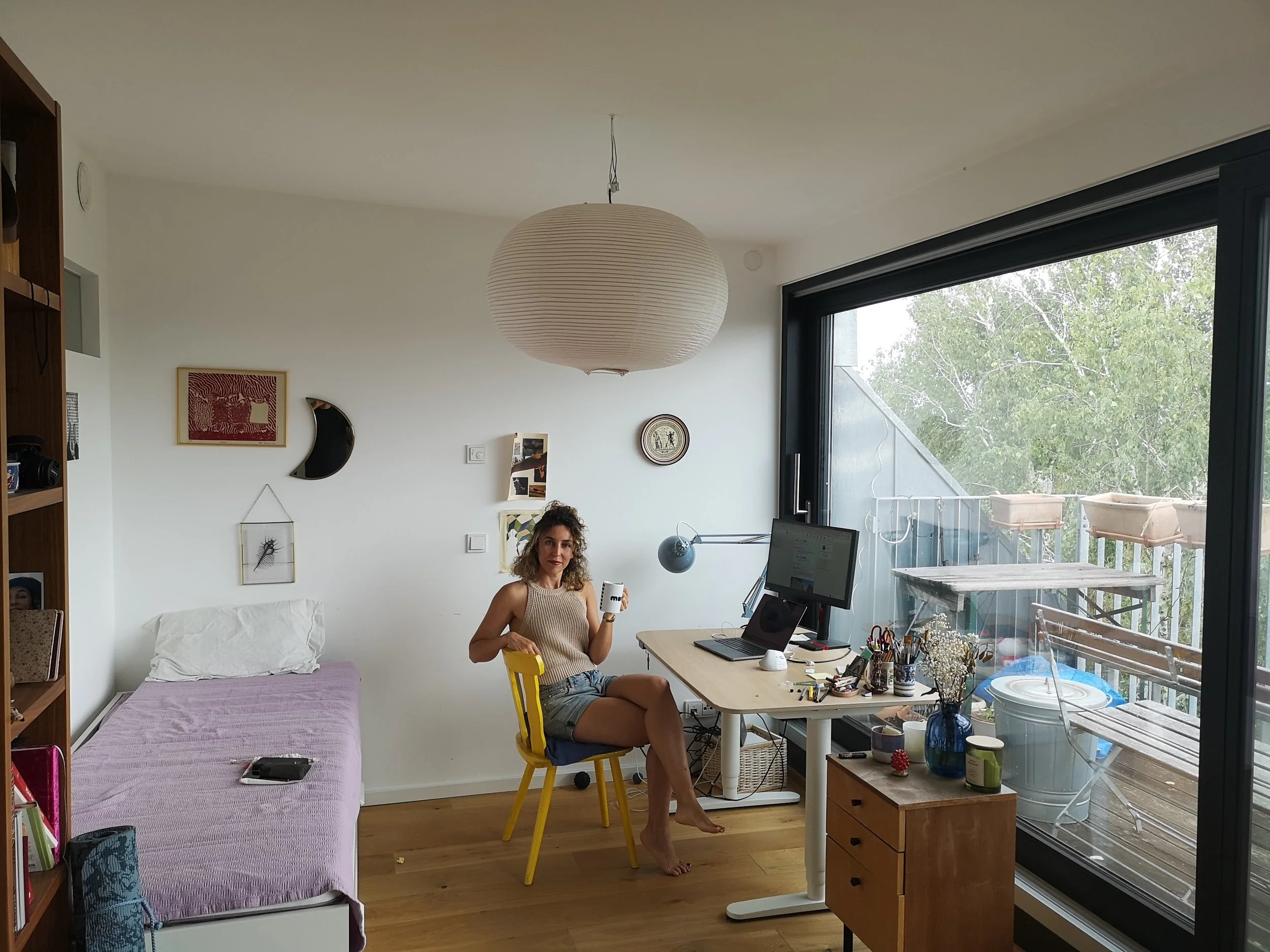
In her city of choice, Berlin, Göksu Kaçaroğlu continues to question what it means to carry the title of designer. Since graduating, she has moved between roles — freelancer, agency collaborator, UX researcher in corporate settings, and now principal product designer in a major European tech company — each carrying both possibilities and constraints.
“[Research is] part of how you define the problem area [and] how you find opportunities before you start building design solutions.”
Research has always been central to her practice — “part of how you define the problem area, how you find opportunities before you start building design solutions.” But in corporate structures, the role came with boundaries she found limiting. “I was in a UX researcher role at a large digital platform for some time,” she recalls, “but I realized it was not helping me to use all my skill sets as a designer. My background is in product service systems design. So being in a research role, and also seeing how leaders were fighting for research, made me feel… maybe this is not the right role for me. I wanted to move back into design.”
Another sober realization came once she entered the rigid hierarchies of a corporate organization: what she found most complex was not the work itself but the people. “How you align everyone, how you put everyone on the same page, whereas they all have their own agendas within their units and objectives. That required a lot of stakeholder management skills I wasn’t very aware of before, because I had worked freelance for many years.” For someone used to autonomy, this was an education in politics as much as in design.
“I realized I was putting too much expectation on one single job to fulfill all my needs — security, variety, doing something meaningful, being appreciated by the community.”
Outside of work, she is seeking outlets for creativity that feel more meaningful. “I realized I was putting too much expectation on one single job to fulfill all my needs — security, variety, doing something meaningful, being appreciated by the community. That’s not really possible in day-to-day work. So I try to balance it. I mentor, I applied to volunteer at a local impact hub, and I do small projects like creative repair workshops or clothes swapping events. These kinds of hobbies make me feel I’m using my creative skills and resources into something meaningful, into something I want to contribute as a value.”
That same impulse extends into teaching. Kacaroğlu speaks of bringing sustainability and broader values into an educational context, describing it as life-centered design. “I try to teach by bringing sustainability and other important values I believe in,” she says. For her, mentoring, volunteering, and teaching are all ways of planting seeds where design feels freer — spaces where she can shape practice in line with her values.
When asked about the so-called crisis of design — the pressures of AI tools, cost-cutting, and identity struggles across the industry — Kacaroğlu reframes the question. Perhaps the problem is the label itself. “We should consider how we can go beyond the traditional definitions of design, how we can free ourselves from the identity we were carrying for too long. Maybe this is what is blocking us. Who is a designer? Maybe this is the first question.”
“Some of them had this awakening: I need to slow down, I need to understand how I can do something more meaningful. Maybe spending time with my community is more fulfilling than running after a corporate goal.”
This identity crisis is not abstract. She has seen peers laid off from startups, suddenly forced to question who they are without a company badge. “Some of them had this awakening: I need to slow down, I need to understand how I can do something more meaningful. Maybe spending time with my community is more fulfilling than running after a corporate goal. Others turned toward solopreneurship. One friend started her own business creating workshops inspired by pilates and design thinking, and she said she has no intention to go back to work for someone else.”
Yet the divide is real: while some designers thrive in organizations with good pay and recognition, many others remain outside, struggling to enter an industry that now demands fully formed experts from day one. “I’m really sad about the new generation of designers who are graduating. Companies are not looking to nourish and grow them. They want someone senior from the start who can plug in a specific skill set.”
Against this backdrop, she insists on building purpose in other ways. Community remains her anchor, not just for belonging but also for critique. “In my current role I feel more engaged compared to my research role, partly because I’m surrounded by talented, generous, and kind colleagues. This environment creates space for creative and critical conversations that nurture me as a designer. Even if it’s not directly on the product, it is changing the way people approach things. If we are all critical, if there is an open space for discussing what we are doing — for good and for bad — it gives me fulfillment.”
“Why not have measures of quality, of meaningful time spent or engagement? More humane, sustainable, psychologically positive metrics.”
She imagines new metrics beyond speed and profit: “Why not have measures of quality, of meaningful time spent or engagement? More humane, sustainable, psychologically positive metrics.” Yet she is blunt about the structural limits designers face. Regulations can block progress as much as corporate inertia. She recalls colleagues fighting simply to display sustainability indicators on product pages, only to be blocked by the complexity and constantly evolving European sustainability legislation.
And beyond law, there is the basic question of survival. “The price of trying to do something good shouldn’t be that high for a designer. Why should I have to volunteer in my free time just to do the real things that are important for our planet and our people?” Many of her peers, she notes, are forced to rely on government grants or unemployment benefits to pursue meaningful work outside of corporate tech.
“Don’t read the titles, read the descriptions. Understand whether your skills will be helpful within the context. Maybe we need to create our own job titles and not put ourselves in a box.”
Her role as a mentor makes these realities sharper. She tells her mentees to resist being trapped by job titles. “Don’t read the titles, read the descriptions. Understand whether your skills will be helpful within the context. Maybe we need to create our own job titles and not put ourselves in a box.”
She knows this from experience: her own education trained her in social innovation and facilitation, but as a freelancer she could rarely find projects that paid as well as large corporations. “There is a gap between academic ideology and real life. Many young designers believe they will save the world. And design can — but not alone. We should be placed in the right places. Maybe in order to do that, we shouldn’t brand ourselves as designers. Because if you want to work for the United Nations, for example, they’re not looking for a designer, they’re looking for anthropologists, psychologists. Yet design methods could unlock something there.”
Her solution is to reposition design not as a profession locked behind a title but as a transferable mindset. In her corporate experience, pushing service design as a separate department was a losing battle. Instead, she found it more powerful to practice systems thinking openly, showing colleagues how mapping problems could connect to business numbers. “They were surprised. Then they asked, how did you do that? Maybe we should bring this approach to our team. I’m open to sharing my methods, to guide others. That’s how I see design — not a siloed expertise, but a skill set available to all.”
“It keeps changing how we specialize and then not specialize again. It’s difficult for non-designers to catch up. They still think of design as furniture, posters, visuals.”
Still, she recognizes how fast the field is shifting. “Now it’s UX, now it’s product, now it’s UI. It keeps changing how we specialize and then not specialize again. It’s difficult for non-designers to catch up. They still think of design as furniture, posters, visuals. They don’t understand the intangibility of design thinking as a process and method.” For her, the only irreplaceable core is systems thinking: connecting dots across disciplines, facilitating conversations, situating problems in their wider ecosystem. The rest — the craft, the execution — may soon be automated.
Even with this realism, she resists despair. She talks about identity as something elastic: even if she leaves UX entirely, even if she opens a café one day, she will carry her design mindset with her. “I’m not deleting my designer identity. I’m just building on it. Whenever I need to access it, it will be there. That makes me feel less worried about my future as a designer.”
Her reflections land with a mix of critique and calm pragmatism. Perhaps design is indeed at a crisis point — but Kacaroğlu suggests that crisis might be a chance to let go of the weight of labels. To see design not as a fragile profession to be defended but as a way of thinking that can live anywhere: in communities, in systems, in futures yet to be imagined.
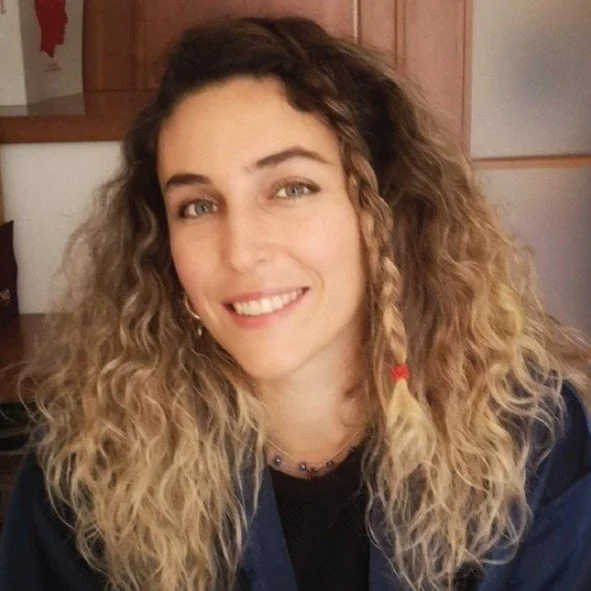
Göksu is a Berlin-based product service systems designer who leads design-driven innovation and strategy projects, helping senior leaders make confident decisions that create value for people, businesses, and society. Beyond her day job, she mentors impact startups and teaches life-centered design in various educational contexts.
