
Saurabh Datta on Working in the Gray Zone of Tech and Design
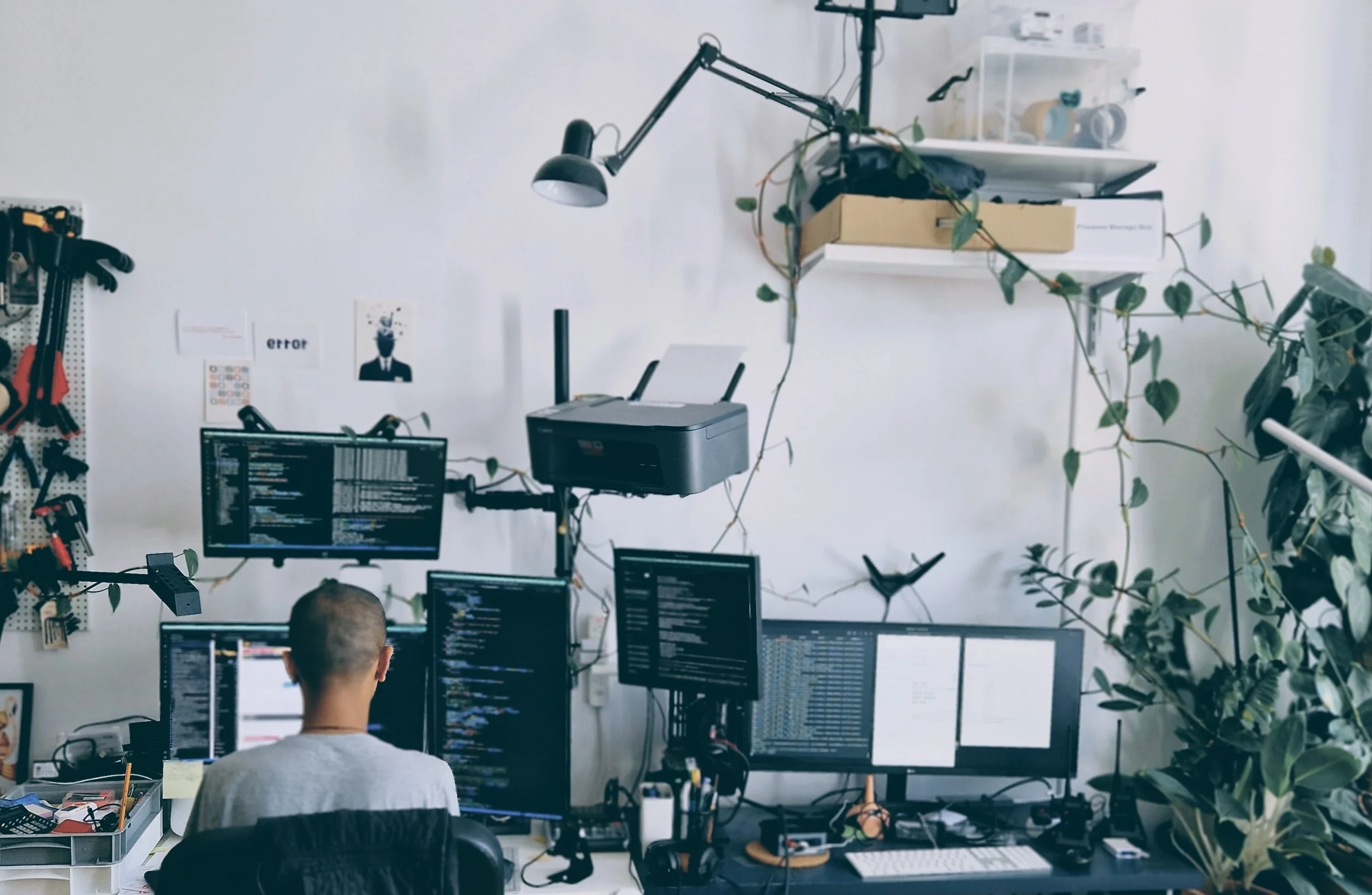
When we meet Saurabh online, he's calling in from Berlin, wrapped in a jacket against the city's gloomy November sky. He's just returned from India, and though we're connecting across three European locations, there's an immediate warmth to the conversation, the kind that comes from shared history. Nina first met Saurabh over a decade ago in Copenhagen, when he was graduating from the interaction design program at CIID and already stood out for his unusual approach: architect by early training, interaction designer by choice, and philosopher by temperament.
That unusual combination has defined his path ever since. After CIID, he bounced between media arts and design, eventually landing at frog Design, which took him to China for what he calls "the best time ever." After seven exciting years, split between Shanghai and Beijing, Saurabh made his way back to Europe, joining the consultancy Prophet in Berlin toward the end of 2021.
Now, Saurabh works at multidisciplinary design consultancy, zigzag in Berlin, bringing what he describes as 'the gray zone of tech and design' to a team that's strong on traditional design but – like many design teams today – is still finding its footing with the experimental, the technical, and the unknown. His role is split three ways: (occasional) business development, (occasional) project management, and full-time hands-on building and exploration. "I'm doing three people's jobs at the moment," he says with a laugh that sounds only half-joking.
“I cannot really explain to anyone what I do until they spend a lot of time seeing what I do.”
It's a position that requires constant translation. "I cannot really explain to anyone what I do until they spend a lot of time seeing what I do," he admits. But that difficulty of explanation points to something larger: the field of design has become harder to define, harder to navigate, harder to defend.
When asked whether design is in crisis, Saurabh's response is characteristically nuanced. "Design has always been in a bit of the back seat," he begins, citing Scott Galloway's observation that creative professions have never had the security of law or medicine or accounting.
What's changed isn't the fundamental precarity, but rather the volume and visibility of it. Between 2020 and 2022, digital companies hired aggressively, then fired just as fast. "They were like, we can do digital design, so let's hire a bunch of people. And then like, oops, we don't understand… Gaslight and fire." Large corporations followed a slightly different timeline, but the result was the same: blue-sky R&D facilities shut down, future centers sold off, entire teams laid off.
The challenge, he argues, is partly self-inflicted. "We haven't really evolved our design process. I cannot put my finger [on it] and say when it started, but we started putting things into boxes… And that was okay for some time, but now it's backfiring."
Much of the current crisis, Saurabh believes, traces back to education; or more precisely, to the gap between what design schools teach and what the world actually demands. He's seen it firsthand in the young designers he works with, many of whom have been trained to start every project the same way: by opening Figma and drawing boxes.
"I'm wondering if tomorrow Figma vanishes, what's left for young designers?" It's not meant as a dismissal, but rather it’s a genuine concern. The problem isn't the tool; it's the mindset that reduces design to a single software package, a predictable workflow, a comfortable pattern.
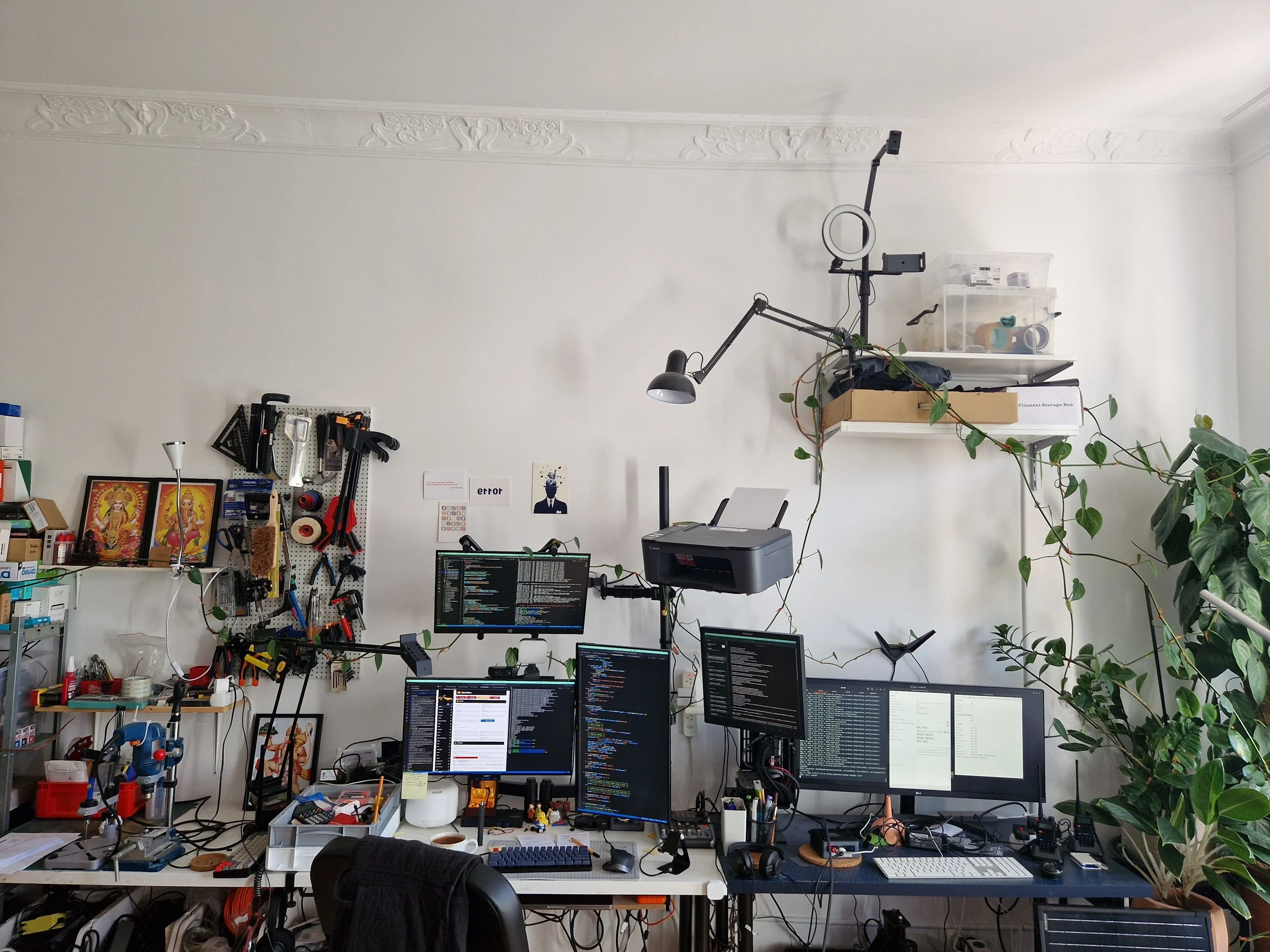
“We never designed like that. We never started in a tool like Figma.”
His own education was different. At CIID everyone was encouraged to prototype wildly, to break things, to understand not just interfaces but the systems beneath them. "We never designed like that. We never started in a tool like Figma."
Learning terminal commands, version control, the basics of Python may not have been immediately necessary, but all of it became essential later. "People would have asked, why should you learn Python over HTML? I was like, I don't know. Maybe it's nice. It'll come handy. Well, now it's coming handy."
But convincing younger designers to adopt that exploratory mindset is difficult now-a-days. "If you ask someone to do something, they would say, why should I do it? What is the direct benefit from it? Is it going to get me a job?" These questions are understandable; in a sluggish job market, the pressure to orient for immediate employability leaves little room for the kind of open-ended exploration that only pays off later, if at all. "It's very hard to tell people why you should learn to do something new… but you cannot learn without putting your time in."
The pattern he sees most often: fear. Fear of code, fear of the unknown, fear of admitting what you don't understand. "Part of my effort here, not a formal one, but in the shadows, is to break that fear from people, especially with young [designers]." He tried to teach them certain things like Git not because they'll necessarily need it tomorrow, but because understanding how things work at a slightly lower level removes a barrier. "Maybe that leads you to learning Python. Maybe that leads to something else. The effort is how to keep it curious, but grounded and not diluted"
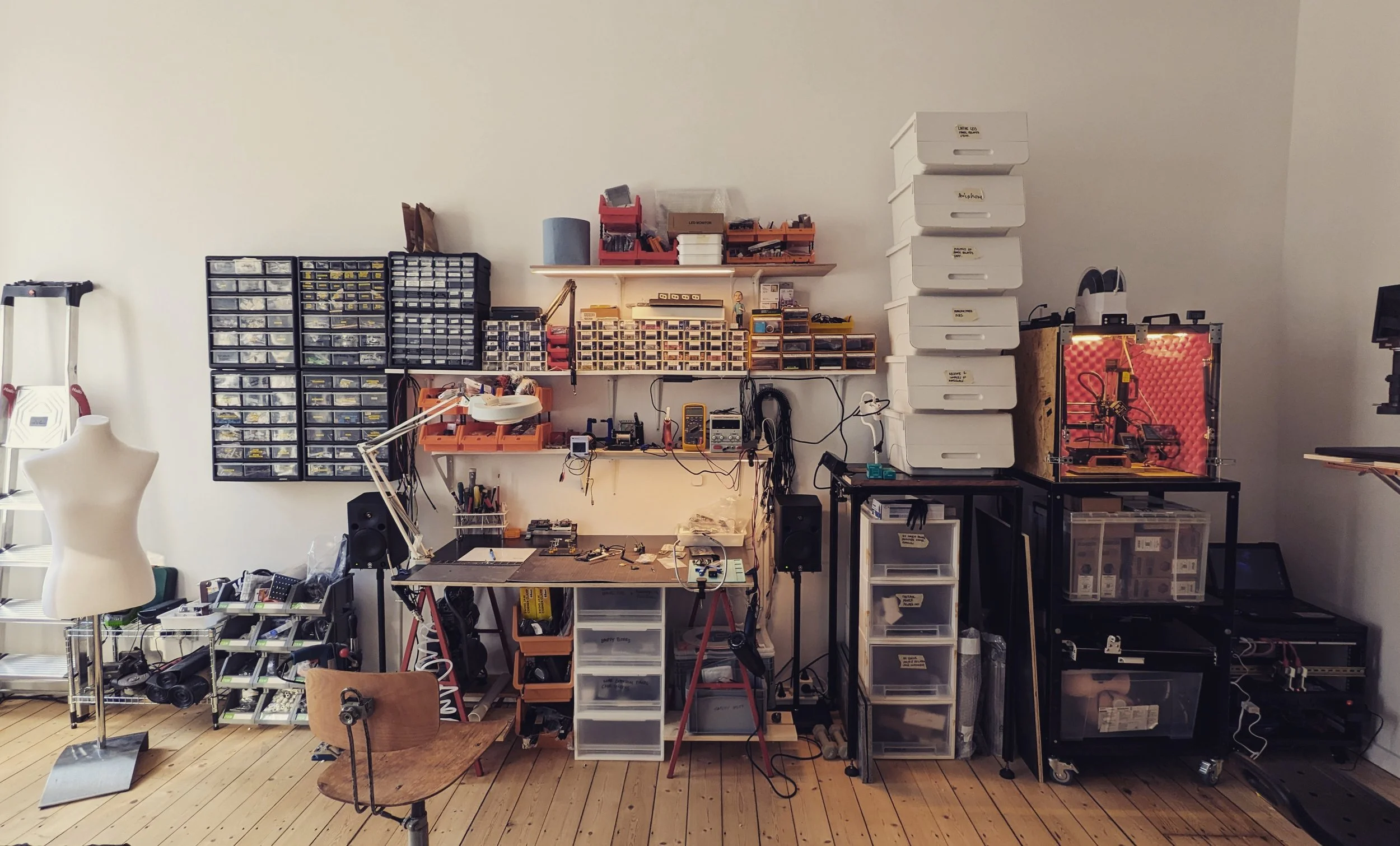
“This is systematic thinking. I’m not saying I’m better at it, but you get it once you solve a lot of cognitive problems, and you get better and better at it every day.”
Saurabh tells a story from a recent complex and face-paced project involving digital, physical, and spatial elements. The team was in the middle of QA testing when the client arrived with feedback that was scattered, urgent, and hard to parse. Two other designers were working on separate tasks. Saurabh was listening.
"I was like, look, if you want to make this better, learn to do better QA." He didn't have a process for this. Nobody had taught him this at school. But he'd been through similar chaos before; on-site, two days before a show, managing feedback on integrated systems. So he made a table. "Bare minimum, just for the structure, so that they can give a structured response which I can analyze and fix the bugs." It wasn't elegant. But it worked. "This is systematic thinking. I'm not saying I'm better at it, but you get it once you solve a lot of cognitive problems, and you get better and better at it every day."
For Saurabh, this is what design education should prepare people for: not just executing known processes, but improvising structure in real time. "You have to go through it, and people have to give [opportunities] to you when you are young." He credits his early mentors at frog Design for putting him through fire, for giving him the chance to fail in controlled ways so he'd know how to handle uncontrolled chaos later.
But not every designer gets that opportunity. Some are told their job is to stay in their lane. Some work in environments where exploration is actively discouraged. And some simply don't have the bandwidth to experiment when they're worried about their next pay check.
“Try and learn new things as we go… and remember why you decided to be creative.”
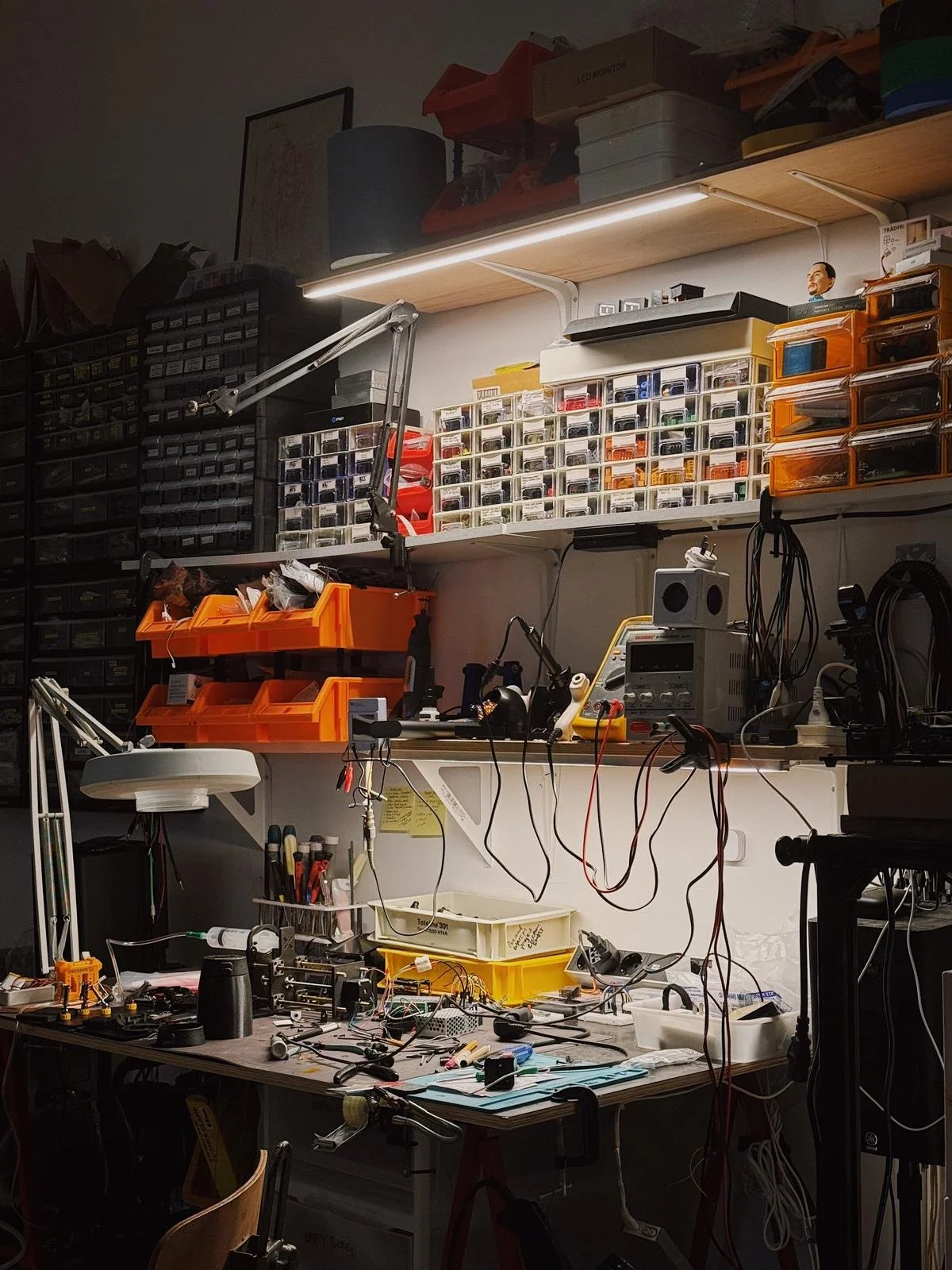
His advice to younger designers is simple, if daunting: "Try and learn new things as we go… and remember why you decided to be creative." It's not about following a roadmap, there isn't one. It's about maintaining curiosity even when it doesn't pay off immediately.
The path forward, for Saurabh, isn't about choosing between design and technology, between craft and strategy, between art and business. It's about refusing the choice entirely. "We will not get away from higher levels of abstraction, but in the long run, the survivors will be the ones who [can] go to a certain level of depth."
It's an impossible tension: to survive in design right now seems to require constant self-education, constant skill-building, constant vigilance against obsolescence. But that constant effort is exhausting, unsustainable, and often unpaid. How do you maintain curiosity when curiosity itself has become a form of labor?
Saurabh doesn't have an answer. He just knows that the gray zone is where design lives now. Not in the clean workflows of Figma, not in the polished presentations of business strategy, not in the theoretical purity of academia. But in the messy space between all of those things, where you're constantly translating, constantly building, constantly figuring out how to solve problems nobody taught you to solve.
Perhaps the crisis of design isn't really a crisis at all. Perhaps it's just the moment when the field finally admits what Saurabh has known all along: that there never was a comfortable center, that the gray zone was always the real territory, and that learning to live there, with all its uncertainty and discomfort and possibility, might be design's most essential skill.
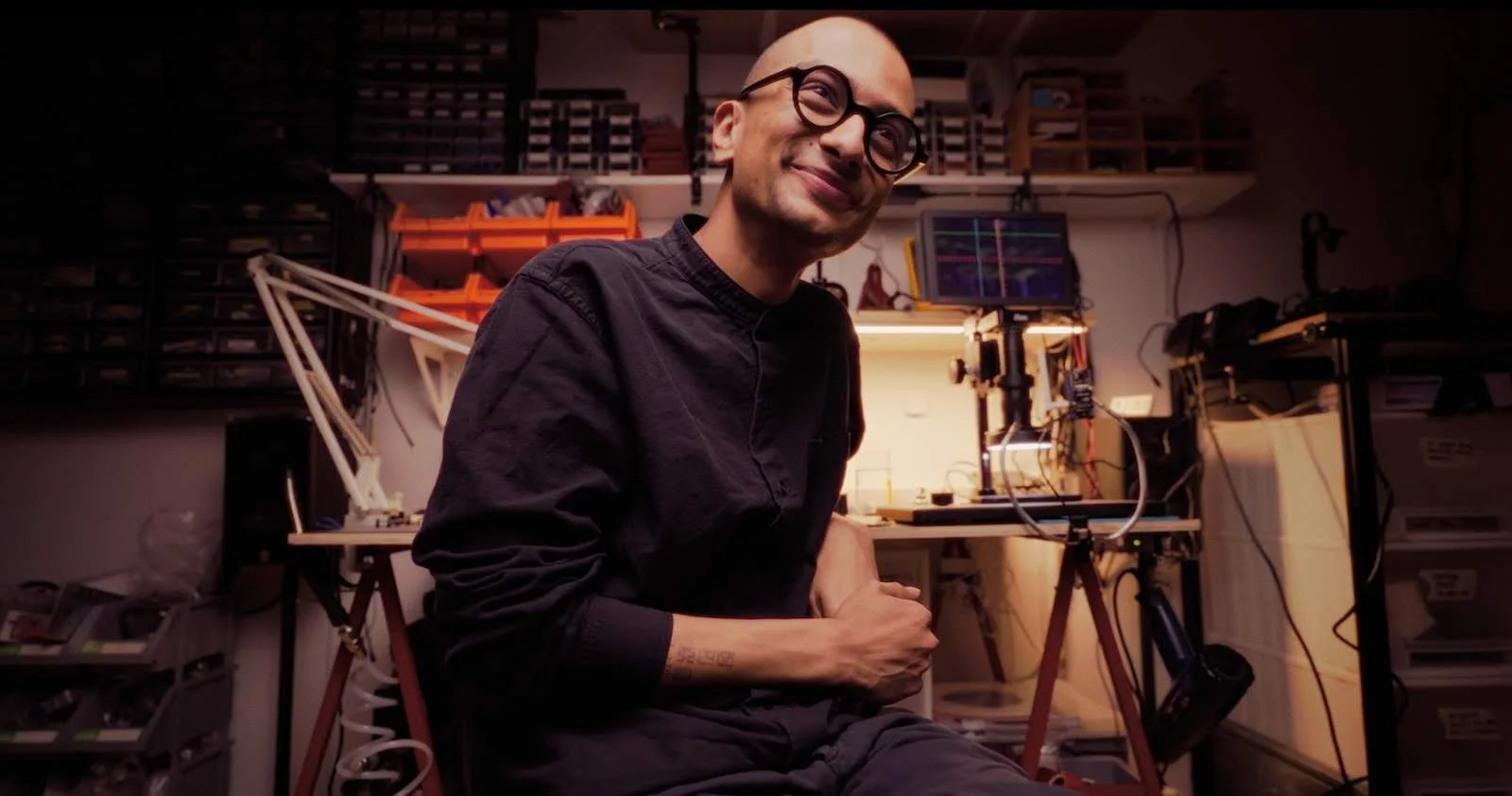
Over the past decade, Saurabh Datta has built and led creative technology and R&D teams across design agencies (frog, Prophet), in-house innovation labs (Volkswagen Group), and his own ventures (Datta+Baum), consistently working at the intersection of hardware, software, and design. At Volkswagen Group China's Future Center Asia, Datta established the first creative technology division and advanced in-car experience R&D facility, shaping the group's vision for urban mobility across Asia over four years. Before that, at frog design in Shanghai, he progressed from interaction design intern to Senior Interaction Designer & Creative Technologist, shipping work across automotive, consumer electronics, data science, and architecture. At Prophet GmbH in Berlin, Datta spearheaded the Experience & Innovation practice by building the team, developing new business pipelines, and bringing in clients including VW Group Innovation, Audi, Mercedes, and Bentley. His final project there was designing and integrating an AI-driven in-car HMI for VW’s Gen. Urban concept.
Datta currently leads a team at zigzag, where he bridges design practice with integrated hardware-software solutions and double down on local Generative AI efforts. In parallel, he co-founded Datta+Baum Studio with Benjamin Baum (ex-Porsche), a product design venture where he oversees electronics system development, supplier management, and art direction. He has also maintained an independent art practice, co-founding an art collective while exhibiting at MAK Vienna, Vitra Design Museum, and ZKM, and continuing solo new media work.
Teaching is close to Datta’s heart, and he recently finished teaching a course at Bauhaus University. Seven years in China, alongside work in Europe before and after, gave him deep fluency in cross-regional product thinking. The through-line across all of it is building things that sit between disciplines, and making them real.
