
Maya Ninova on Research as a Specialization
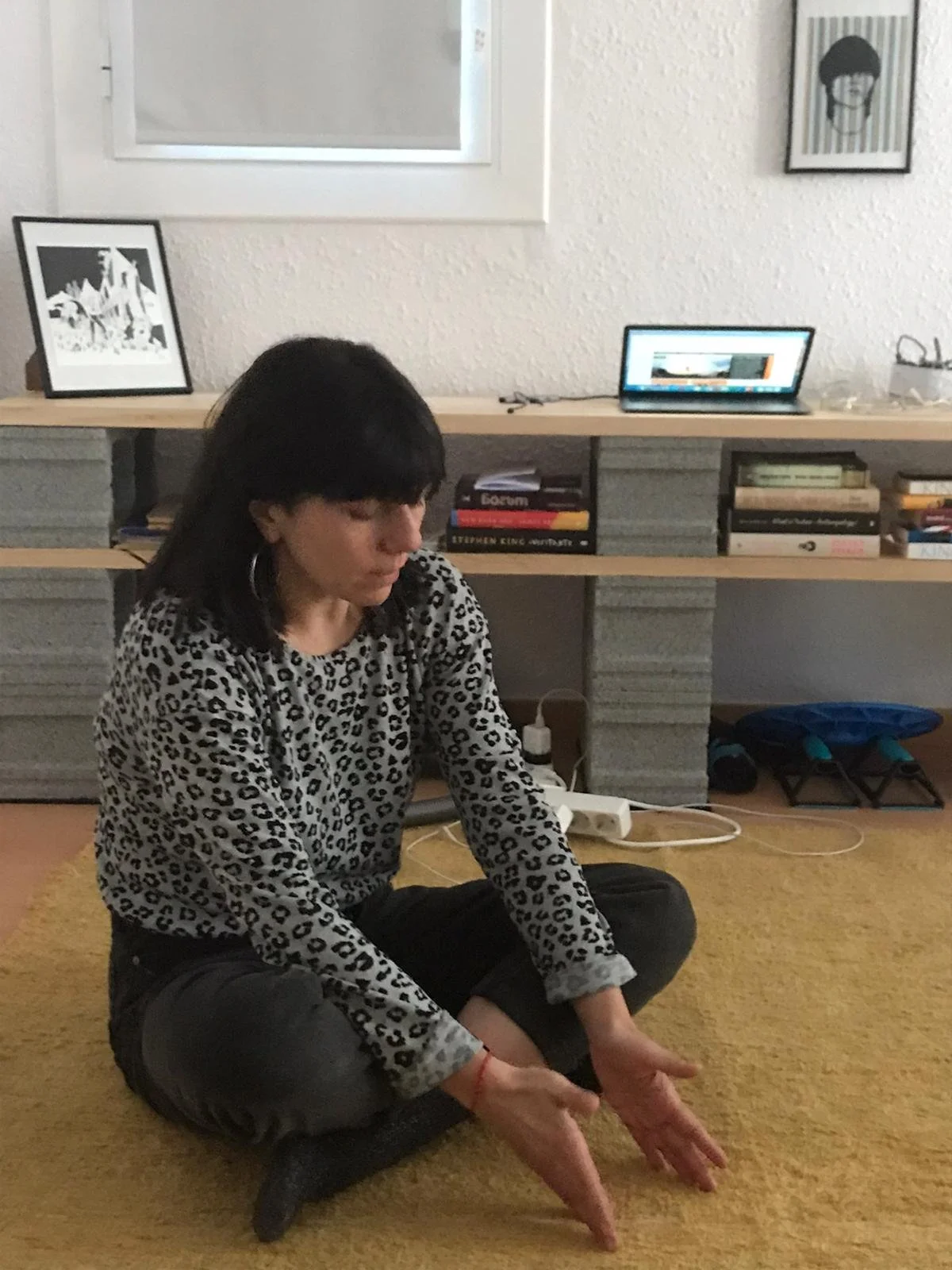
When we meet Maya Ninova online, she is calling from her home office in sunny Barcelona, where she has lived for more than twenty years. From here she works with global organisations across industry and non-profit.
“Everybody talks about AI and qualitative research. I don’t think it’s ready yet”
Maya Ninova remembers the early days of automated research tools with a mix of disbelief and unease. “At the beginning, we could even read private conversations on Facebook,” she recalls. “That was awful. I thought, okay, I’m not going to talk about anything on Facebook anymore.” Back then, research software scraped purchased datasets and clustered conversations by keywords. It worked—at least in English—but broke down in other languages. What was marketed as intelligent analysis often collapsed into manual labour. “We had to classify the content so the algorithm could learn,” she says. “That was a lot of manual work.” She shares these stories not out of nostalgia but as a warning. Today’s enthusiasm for AI in research, she argues, echoes that same misplaced trust. “Everybody talks about AI and qualitative research. I don’t think it’s ready yet.”
Her path through academia, public sector research, and commercial tech has been anything but narrow. Large-scale digital ethnography, online focus groups, and projects spanning everything from healthcare to mobility gave her a sharp vantage point on the frictions between design and research. If her tone is at times critical, it’s because she believes the discipline is at risk of being undermined by the very industries that depend on it.
“Right now, most of the designers I work with in tech are graphic designers at heart. And I have nothing against them, but many just wait for somebody to tell them what to do. That’s not the mindset of a designer.”
Asked to describe the current scope of UX research in tech, she hesitates, then points toward a deeper cultural issue: “Right now, most of the designers I work with in tech are graphic designers at heart. And I have nothing against them, but many just wait for somebody to tell them what to do. That’s not the mindset of a designer.” She describes how, often, the same group of colleagues in tech are asking her to research questions that didn’t even require research. At the same time, basic sources of design knowledge—like documented principles of interaction design—were ignored. “Imagine our challenge (as UX Researchers). We have to push back and explain, but they think they’re superior to you, so they don’t listen.”
This frustration intensifies when she compares freelance work to in-house roles. As an external expert, she often has direct contact with decision-makers who listen and act. Inside organizations, however, she found research sidelined. “Designers decide what is going to be researched, and that’s it,” she says. “It doesn’t make sense, but that’s the reality.” Her attempt to scale a research practice inside a large company revealed even deeper gaps. Processes taken for granted in her field, like recruitment, were barely understood.
The lack of process often leads to research being misused—or worse, replaced. She recalls product managers who presented ad-hoc conversations as evidence, insisting they had “done research.” In one case, the “study” consisted of two informal interviews with questions like "Do you like it? “That’s not research,” Ninova says flatly.
Much of this stems from the democratization of research—a trend Ninova views with suspicion. She points out that user research began with social scientists, but in many European contexts their expertise is now sidelined. “They think whoever can do it,” she says. “But it’s not working.” Even when research is conducted properly, its influence often depends on an organization’s maturity. Sometimes leaders acknowledge her findings but dismiss action as too costly. In other cases, she notes, design is reduced to surface-level visuals, with little awareness that user experience begins long before the product itself.
“It’s physically impossible [to support everyone]. And so they say, let’s democratize research. Which is quite misleading.”
Structural constraints make it worse. Researchers are often spread thin across ten or more product teams. “It’s physically impossible. And so they say, let’s democratize research. Which is quite misleading.” The alternative, in Ninova’s view, is clear: embed researchers directly in teams, supported by senior leads who can create training and methodologies over time. “But training takes time. It’s basically teaching. And the motivation to learn is often zero.”
If research is already struggling to assert itself as a specialization, AI introduces another layer of risk. Non-researchers often mistake operating a tool for doing the research itself — a confusion she finds dangerous. She concedes there are uses, such as compiling datasets or supporting statistical analysis, but the shortcomings in qualitative work are glaring. “Most insights come from the little things, not the big trends,” she warns. “That’s going to be lost.”
“That’s very dangerous, because research informs decisions.”
Bias is another major concern. Confirmation bias, she notes, can easily creep in when untrained people take AI-generated data at face value. “That’s very dangerous, because research informs decisions.” Even the technical underpinnings are opaque. When she asked whether a German-language query pulled only from German sources or machine-translated English ones, the developers had no clear answer. For Ninova, these gaps show that AI tools are being promoted as solutions long before they’re ready. “Right now, it’s more of a simulation than a solution. Businesses buy the hype because they think they’ll save money by not hiring researchers. But it creates a lot of mess.”
Looking ahead, she is intrigued—but cautious—about the idea of agentic AI systems acting as users themselves. “I’ve never thought about this before,” she admits. “But yes, if agents are booking flights, maybe you don’t need an interface. Still, we need to be there, upgrading ourselves with more technical knowledge to understand how algorithms work.”
Her favorite example is a legacy enterprise software product still managed through a green-on-black command line, because in a submarine with no internet, that’s what works. “A designer once tried to create an app for it. But if you’re in a submarine, what app? You don’t have internet. That’s how disconnected some designers are from the product they work on.” The point, Ninova insists, is that interaction design has never been only about interfaces. It is about creating meaningful connections between humans and systems. That requires expertise—expertise too often dismissed.
“Research is a specialization. It’s a discipline per se.”
As the conversation winds down, Ninova offers one truth she wishes every team would absorb: “Research is a specialization. It’s a discipline per se.” Her words land with the clarity of hard-won experience. Research, like design, cannot be reduced to a set of tools or templates. It is a practice that requires training, interpretation, and judgment. In an era where businesses are tempted by quick fixes and automation, Ninova’s insistence feels not just protective but essential.

Maya Ninova (she/her) is a researcher and consultant with broad international research and mentoring experience in transdisciplinary and multicultural teams. She writes regularly on topics related to design, culture, user behavior and online social phenomena and teaches subjects related to social sciences and applied research. She has special interest in the evolution of the Techno-Anthropology field, understood as a study of the relationship between humans and digital-era technologies not only on interaction level but also its implications for Design and Innovation of technological systems and practices.
